
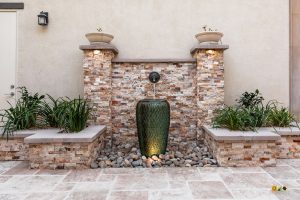
Picking paver colors and patterns sounds simple until you see the options. Walk into a showroom and you’ll find dozens of colors, multiple sizes, and patterns you’ve never heard of. It can feel overwhelming fast.
But here’s the good news: a few basic principles can guide your decision. When you understand how color, pattern, and your home’s style work together, the choices narrow down quickly.
This guide will help you pick pavers that look great, stay comfortable in the California sun, and fit your neighborhood.
Why Color Matters More Than You Think
Paver color isn’t just about looks. In Southern California, it affects comfort too.
Heat and Surface Temperature
Dark colors absorb more sunlight. Light colors reflect it. On a summer afternoon, this difference is real and measurable.
A dark charcoal paver in direct sun can reach surface temperatures well over 130°F. A light tan or cream paver in the same spot might stay 20 to 30 degrees cooler.
If you’re installing pavers around a pool deck or anywhere people walk barefoot, color matters. Lighter shades keep surfaces more comfortable.
This doesn’t mean you have to go pure white. Medium tones like sandstone, buff, and light gray offer a good balance. They stay cooler than dark colors while hiding dirt better than very light shades.
Fading Over Time
All pavers fade slightly with years of sun exposure. It’s a normal part of outdoor materials.
Lighter colors show less fading because there’s less contrast between the original shade and the faded version. Dark pavers, especially black and dark brown, show more noticeable change over time.
Quality pavers have color mixed throughout the material, not just on the surface. This means even as the top wears, the color stays consistent. Ask about “through-body” color when comparing products.
Sealing your pavers can slow fading and keep colors vibrant longer. But even sealed pavers will shift slightly over many years.
Matching Colors to Your Home’s Style
The best paver color connects to your home’s existing look. Start by looking at these elements:
Roof Color
Your roof is one of the largest color blocks on your property. Pavers should complement it, not clash.
- Terra cotta or red tile roofs pair well with warm earth tones: tan, brown, rust, adobe
- Gray or black roofs work with cool tones: gray, charcoal, bluestone colors
- Brown or wood-tone roofs match warm neutrals: beige, sand, light brown
Exterior Walls
Look at your stucco, siding, or brick. The pavers don’t need to match exactly, but they should feel like part of the same palette.
- White or cream walls give you the most flexibility
- Warm beige walls look best with warm paver tones
- Gray or blue-gray walls pair with cool paver colors
Stone or Brick Accents
If your home has stone veneer, brick trim, or a masonry fireplace visible from outside, pull colors from there. Matching pavers to existing stonework creates a unified look.
Architectural Style Guidelines
Different home styles have natural paver pairings. These aren’t strict rules, but they’re a helpful starting point.
Spanish, Mediterranean, and Tuscan
These styles are common throughout Southern California. They feature warm colors, textured surfaces, and old-world charm.
Best colors: Terra cotta, rust, warm brown, sand, adobe
Best patterns: Random layouts, large format with small accent pieces, circular patterns
Best textures: Tumbled edges, natural stone looks
Modern and Contemporary
Clean lines, minimal decoration, and bold contrasts define modern homes.
Best colors: Gray, charcoal, white, black, concrete tones
Best patterns: Linear layouts, large format pavers, simple running bond
Best textures: Smooth, clean edges, uniform appearance
Craftsman and Traditional
These homes emphasize natural materials and handcrafted details.
Best colors: Brown, tan, natural stone tones, muted earth colors
Best patterns: Herringbone, basketweave, classic brick layouts
Best textures: Slightly textured, natural variation
Coastal and Beach
Light, airy, and relaxed. Coastal homes often use natural materials and soft colors.
Best colors: Sand, cream, light gray, weathered tones
Best patterns: Simple layouts, natural stone shapes
Best textures: Tumbled, weathered, natural stone
Popular Paver Patterns
The same pavers can look completely different depending on the pattern. Here are the most common layouts:
Running Bond (Offset)
Pavers are stacked in rows, with each row offset by half a paver. It’s simple, classic, and works with almost any style. The lines can run lengthwise to make a space feel longer, or crosswise to make it feel wider.
Herringbone
Pavers are set at 45 or 90 degree angles in a zigzag pattern. This is one of the strongest layouts for driveways because the interlocking angles resist shifting under vehicle tires.
Herringbone takes more cutting at the edges but creates a timeless, tailored look.
Basketweave
Pairs of pavers alternate direction, creating a woven appearance. It’s a traditional pattern that works well for patios, walkways, and courtyards.
Stacked Bond (Grid)
Pavers line up in a straight grid with joints running both directions. This modern pattern looks clean but is less stable than offset patterns. It works better for patios than driveways.
Random or Ashlar
Multiple paver sizes combine in an irregular pattern. This creates a natural, organic look similar to flagstone. It hides imperfections well and works great for Mediterranean and rustic styles.
Circular
Pavers radiate out from a center point. Circles create natural focal points and work well in courtyards, around fire pits, or as accents within larger paver areas.
HOA and Neighborhood Considerations
If you live in a community with a homeowners association, check the rules before finalizing your choice. Many HOAs have guidelines about:
- Approved colors (often limited to earth tones)
- Material types (some ban certain materials)
- Pattern restrictions
- Driveway requirements
Even without an HOA, consider your neighborhood. Pavers that fit the area’s character tend to look better and help property values. A bright white modern patio might look odd in a neighborhood of Spanish-style homes.
Drive around and notice what works. You don’t need to copy your neighbors, but being aware of the context helps.
Tips for Making Your Final Choice
Get Large Samples
Small chips don’t tell the whole story. A color that looks perfect on a 2-inch sample might feel very different across 500 square feet. Ask for full-size pavers or visit a design center where you can see larger displays.
View Samples Outside
Showroom lighting is nothing like outdoor sun. Take samples outside and look at them at different times of day. Morning light, midday sun, and evening shade all change how colors appear.
Wet the Samples
Pavers look different when wet. If your area gets irrigation overspray or you’re installing near a pool, see how the color shifts when damp. Some pavers darken significantly when wet.
Consider the Whole Project
Think about what surrounds the paver area. Plants, outdoor furniture, and structures are all part of the picture. Bring photos of your space when shopping for pavers.
Don’t Overthink It
At some point, you have to decide. If you’ve narrowed it down to two or three options and all of them work, trust your gut. Any of them will probably look good.
Common Mistakes to Avoid
Going too dark near pools: You’ll regret it on hot summer days.
Matching exactly to something temporary: Don’t choose pavers to match furniture or paint that might change in a few years. Match to permanent elements like your roof and stonework.
Ignoring the base colors: Some pavers have flecks or secondary colors. Make sure you like all the tones, not just the dominant one.
Choosing based on photos alone: Screens display colors differently. Always see physical samples.
Forgetting about borders: If you’re adding a border or accent band, make sure it works with the main field color.
Need Help Deciding?
Color and pattern choices are easier when you can see everything together. Our design team can show you options that fit your home’s style, your HOA requirements, and your personal taste.
Contact us to schedule a design consultation. We’ll help you sort through the options and find pavers that look great and last.
For more background on paver types and materials, check out our guide on what pavers are and how they differ.