
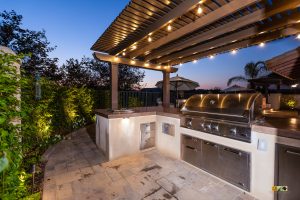
Choosing paver material is one of the biggest decisions you’ll make for your outdoor project. The material affects how your space looks, how long it lasts, how much maintenance it needs, and what you’ll pay.
Three materials dominate the market: concrete, natural stone, and porcelain. Each has strengths and weaknesses. The right choice depends on your project type, style preferences, and budget.
This guide compares all three so you can make a confident decision.
Concrete Pavers
Concrete pavers are the most popular choice in Southern California. They’re made by mixing cement, aggregate, and pigments, then pressing them into molds under high pressure.
What Makes Concrete Pavers Stand Out
Design variety: Concrete pavers come in more colors, shapes, and textures than any other material. You can find styles that mimic natural stone, brick, or modern geometric designs. If you can picture it, there’s probably a concrete paver for it.
Consistent sizing: Because they’re manufactured, concrete pavers have uniform dimensions. This makes installation faster and creates clean lines.
Color throughout: Quality concrete pavers have pigment mixed through the entire block, not just on the surface. If the top wears down slightly, the color stays the same.
Strength: Modern concrete pavers can handle heavy loads. They’re rated for driveways, parking areas, and even commercial traffic.
Where Concrete Pavers Work Best
Concrete pavers are a great all-around choice. They work well for:
- Driveways (when at least 2 3/8 inches thick)
- Patios and outdoor living areas
- Walkways and garden paths
- Courtyards and entrances
Things to Consider
Concrete pavers can fade slightly after many years in direct sun. Lighter colors hide fading better than dark ones. Some homeowners apply sealer every few years to keep colors vibrant.
Lower-quality concrete pavers may have color only on the surface. These can show wear more quickly. Ask about “through-body” color when shopping.
Cost Range
Concrete pavers typically cost less than natural stone or porcelain. Prices vary based on style, thickness, and brand. Simple designs cost less than pavers that mimic natural stone textures.
Natural Stone Pavers
Natural stone pavers are cut from real rock. Popular options include travertine, flagstone, slate, bluestone, and granite. Each piece is unique because it comes from the earth.
What Makes Natural Stone Stand Out
One-of-a-kind appearance: No two stones are exactly alike. The natural variation in color and pattern creates a look you can’t replicate with manufactured products.
Timeless appeal: Stone has been used for outdoor surfaces for thousands of years. It never goes out of style.
Cool surface temperature: Many natural stones stay cooler than concrete or porcelain in direct sunlight. Travertine, in particular, is known for staying comfortable underfoot on hot days.
Longevity: Properly installed natural stone can last for generations. Ancient stone pathways in Europe are still in use today.
Where Natural Stone Works Best
Natural stone shines in high-visibility areas where you want a premium look:
- Pool decks (especially travertine)
- Patios and outdoor entertaining spaces
- Courtyard focal points
- Upscale home entrances
Things to Consider
Natural stone requires more care during installation. Each piece may vary slightly in thickness, so the installer needs more skill to create a level surface.
Some stones are more porous than others. Travertine and limestone absorb liquids and may stain if not sealed. Granite and slate are denser and resist stains better.
Stone can crack under heavy loads if not properly supported. It’s not always the best choice for driveways unless you select a dense variety like granite.
Color variation is part of the charm, but it can be a challenge. The stones you see in a showroom may look different from the batch that arrives for your project. Ordering extra material helps ensure a good match.
Cost Range
Natural stone typically costs more than concrete pavers. Travertine and bluestone sit in the mid-to-high range. Granite and exotic stones cost the most. The stone itself is just part of the expense. Installation takes longer, which adds to labor costs.
Porcelain Pavers
Porcelain pavers are a newer option that has grown popular in recent years. They’re made from clay fired at extremely high temperatures (over 1,200°C). This process creates a very hard, dense material.
What Makes Porcelain Stand Out
Near-zero water absorption: Porcelain absorbs almost no water (less than 0.5%). This makes it highly resistant to stains, mold, and freeze-thaw damage.
Scratch and fade resistant: The hard surface stands up to furniture, foot traffic, and UV rays without showing wear.
Easy to clean: Spills wipe up easily. You can use standard cleaners without worrying about damaging the surface.
Consistent appearance: Like concrete, porcelain pavers have uniform color and size. They can be made to look like wood, stone, or concrete with realistic textures.
Thin profile: Porcelain pavers are often thinner than concrete or stone (typically 3/4 inch to 1 inch). This can be an advantage for raised decks or rooftop installations.
Where Porcelain Works Best
Porcelain pavers excel in areas where moisture and staining are concerns:
- Pool decks and pool surrounds
- Outdoor kitchens and dining areas
- Modern or contemporary designs
- Covered patios and lanais
Things to Consider
Porcelain can be slippery when wet if you choose a polished finish. For outdoor use, always select textured or matte finishes with slip ratings suitable for wet areas.
The thin profile means porcelain needs a very stable, level base. Any movement or unevenness below can cause cracking.
Cutting porcelain requires special tools. The material is hard, which makes field cuts more difficult than with concrete pavers.
Some porcelain pavers have color only on the surface layer. If chipped, the different-colored clay body may show. Look for “full-body” porcelain if this concerns you.
Cost Range
Porcelain pavers usually cost more than concrete but can overlap with mid-range natural stone. The material itself is pricier, and installation may take longer due to cutting challenges.
Side-by-Side Comparison
| Factor | Concrete | Natural Stone | Porcelain |
|---|---|---|---|
| Design Options | Highest variety | Limited by nature | Good variety |
| Durability | Very good | Excellent | Excellent |
| Heat Resistance | Moderate | Good (varies by stone) | Good |
| Stain Resistance | Good | Varies (some need sealing) | Excellent |
| Maintenance | Low to moderate | Moderate | Low |
| Installation Ease | Easiest | Most difficult | Moderate |
| Cost | Lowest | Highest | Middle to high |
| Lifespan | 25-50 years | 50+ years | 50+ years |
| Eco-Friendly | Moderate | High | Moderate |
Which Material Should You Choose?
Choose Concrete If:
- You want the most design options
- Budget is a primary concern
- You’re covering a large area like a driveway
- You want a straightforward installation
Choose Natural Stone If:
- You want a one-of-a-kind look
- The area is highly visible (pool deck, main patio)
- You prefer natural materials
- Cool surface temperature matters (for barefoot areas)
- Long-term value is more important than upfront cost
Choose Porcelain If:
- Stain resistance is a priority (near outdoor kitchens or dining)
- You want a modern, clean aesthetic
- Low maintenance is important
- You need a thin paver for raised or rooftop applications
Mixing Materials
You don’t have to pick just one. Many homeowners mix materials to get the best of each. For example:
- Concrete pavers for the driveway, natural stone for the patio
- Porcelain around the pool, with a natural stone accent border
- Concrete for large areas, with stone inlays at focal points
A skilled designer can help you blend materials in ways that look intentional and polished.
See the Difference in Person
Photos and descriptions only go so far. The best way to choose is to see and touch the materials yourself. Visit a design center where you can view full-size samples, compare colors under natural light, and feel the textures.
If you’re still not sure which material fits your project, we can help. Contact us for a free design consultation. We’ll look at your space, discuss your goals, and recommend materials that match your style and budget.